About Khaled Sayed

Showing posts with label Muslim Brotherhood Terrorism. Show all posts

Monday, June 30, 2014

June 30th First Anniversary


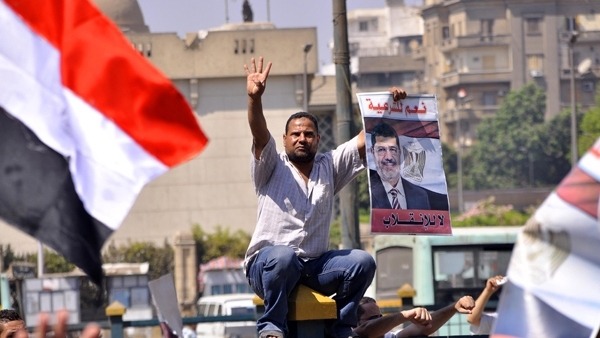
June 30th, 2013 is the day Egyptians decided to act on their Rebel campaign threats. Millions of Egyptians took to the streets of Cairo and many other cities in Egypt to protest against the Muslim Brotherhood ruling and against president Mohamed Morsi.


Walking among the protesters on that day, and overhearing their concerns and disapproval of how Morsi was running the country, gave me hope that change was about to happen. A year later, Morsi's regime has ended, but Egyptians' problems and concerns have not been solved. They are still having gas and electric shortages, a bad economy, inflation, a corrupt government and the garbage issue that is always staring them in the face.


The only difference now is that Egyptians have another president with a regime that won’t allow their citizens freedom of speech, or freedom to protest or complain. So far the Sisi regime is doing a great job of handing out mass sentences to activists and journalists, and of course death sentences to all Muslim Brotherhood supporters and leaders, regardless to their age or affiliations.


The same problems in Egypt that were the main reasons behind the ousting of Mubarak and Morsi still exist for Sisi to deal with. These issues won’t just go away simply because a new president was elected, no matter how you feel about his election.


Egypt's problems won’t go away just because of who is in charge. They are big issues and they need the whole country to come together to face these issues, with a very smart leader to lead. People in Egypt, like people in other countries, want to think that an election is the solution. But although an election is a good way to elect smart leaders who could find ways to solve social and economic issues, no issues will just disappear upon electing one person.


The revolution that started in January of 2011, and the second one in June of 2013, only helped us to remove leaders, not the underlying military regime that has been in power all along. The corrupt regime that Nasser, Sadat and Mubarak helped to build and nourish is what we need to change, and what we need to overcome.


We won’t be able to get rid of the corruption without raising awareness and giving everyone a good education, for old and new generations alike. We need a modern education to help us to listen and respect each other's views, and teach us to voice our opinions in a such a way that we all get heard and acknowledged.


We also need to create a political system that works for us; not copy other people. We need human rights laws and freedom of speech. We need to learn to be selfless and take care of each other, and above all take care of our country and love it.

The question is, when Sisi's government fails to fix Egypt's real problems, will the Egyptian people be able to take to the streets again to protest against the failure of Sisi’s regime, or will military rule prevent that from happening?

Wednesday, May 28, 2014

The Democratic Election Illusion.


You can say many things about Egyptian politics but calling it unpredictable isn’t one of them. Since the first time we had so called democratic and free elections, we always knew who would win, and the 2014 presidential election is no different.
Many Egyptians can’t help feeling like one candidate is the winner this year and that feeling is not new at all. In the Egyptian presidential election of 2012, after our amazing revolution in 2011, we were rushed into an election that forced us to vote for the Muslim Brotherhood puppet “Mohamed Morsi”.
Morsi’s campaign was like a flood that swept Egypt; banners covering buildings, posters everywhere, and he was on TV more than any of his opponents. Morsi’s image was blasted all over the place, and Egyptians were sold on the change he would bring to Egypt. Little did we know it was more of the same.
This time around we have two candidates, but you hardly can see anyone else next to the former army chief Abdel Fattah al-Sisi. Like Morsi, his images are on the buildings, his banners are in the streets, and he is all over the TV.  We’re seeing Sisi giving interviews all over, but Sisi’s rival, leftist candidate Hamdeen Sabahi, is hardly visible.
With headlines like “Sisi Set for a Landslide Win After Egypt Presidential Election Ends,“  and another headline reading, “ A Landslide Victory for Ex-Army Chief Abdel-Fattah el-Sissi is widely expected” leading into the election, it is obvious who everyone believes is going to win.
Many Egyptians are not participating in this election because they feel it is not a fair nor democratic election. But people are not allowed to voice their disagreement with the way this election has been run. Furthermore they are not allowed to protest peacefully in the street. The new anti-demonstration law that was passed this year by the acting interim president left many people in jail awaiting trials, and scared the rest of the Egyptians from protesting.
The overwhelming sentiment is: if you don’t vote for Sisi you are a traitor and you are against the army. With an atmosphere like that, people can’t help but to reman in silence. Activists are pressured to keep their opinions to themselves.
Away from all the campaign and election fuss, many poor people in Egypt don’t care one way or another. After a few years of chaos and clashes, the poor people are still suffering and their situation hasn’t improved, but rather declined. Over a quarter of Egyptians live under the poverty line.
Whoever wins the election, to many people it won’t change much. Knowing who will win an election before it happens takes all its legitimacy away, and makes it far from a democratic process. For now we are jus worried that Sisi will set Egypt back to an old repressive regime that Egyptians are very familiar with when he wins, which, of course, he will.


Wednesday, December 25, 2013

Former PM Hisham Kandil Latest Muslim Brotherhood Member Captured


Authorities in Egypt have arrested the ousted President Morsi’s Prime Minister, Hisham Kandil. Kandil was caught in the southeast mountain area with smugglers while he  was trying to cross the border to Sudan. His arrest came as no surprise since the Egyptian authorities have been hunting down all prominent members of the Muslim Brotherhood and Morsi’s cabinet.


I have been asked time and time again about what is going on in Egypt since I spent six month there this year. Unfortunately my explanation sounds more like fiction, but it seems very obvious to me.


The Muslim brotherhood, who lived in the shadows for years, came out of hiding after the initial revolution that removed Mubarak in 2011. It was a great opportunity for them to replace  Mubarak and capitalize on the revolution. The reason why the Egyptian Military and secret services have been very successful in capturing Brotherhood members is because the Brotherhood felt very comfortable after Mubarak’s fall.


After all, the Brotherhood went through a parliamentary election and won 60% of the seats in 2011, and followed that by nominating an unknown person, Morsi, for the presidency. Getting Morsi a majority of the popular vote must have been a very comforting ego boost to the Brotherhood.


With all the winning in 2011 and 2012, the Brotherhood must have felt as if they were free at last, after 60 years of hiding. The Muslim Brotherhood had attracted more people by proving themselves legitimate after winning a majority and installing Morsi as the president.


In 2013 the Muslim Brotherhood were unstoppable. They became the mainstream, and gained street credibility. However they underestimated the Military, who were watching and quietly doing what they do best; creating a list of all the Muslim Brotherhood members. So when the military answered the people’s call for removing Morsi on July third, they were also ready to dismantle the Brotherhood soon after.


So If you want to know what is going on in Egypt, keep an eye on the military, because they are the ones with the guns, and they have the most to gain or lose if the economy goes bust.


When you hear that the authorities arrested another Brotherhood member, it shouldn’t be a surprise. It is a round-up that the military is doing to secure the country, but mostly to secure their interests and stay relevant.

Sunday, November 17, 2013

Calls to Commemorate Mohamed Mahmoud


Two years ago in Cairo, in November of 2011, I participated in a huge march from the Haram, in the Giza area, which is a suburb of Cairo, all the way to Tahrir Square: probably about nine miles. Here, ten months earlier, the revolution had emerged to remove Hosni Mubarak from power.


I was filming and photographing the crowd as it grew larger and larger, every block we walked, every neighbourhood we crossed. There are no words that could express my feelings on that day. Egyptians mobilizing and organizing to call on the Supreme Council of the Armed Forces (SCAF) to stop the violence, and  make the demands of the revolution come to life.


Many of the protesters knew that the SCAF could attack them. The previous month the SCAF had carried out an attack on peaceful protesters in front of the Egyptian State TV building. The attack resulted in the deaths of several protesters and wounding of many others. But that didn’t stop the protesters from participating this day.


Happily no violence took place.  However the following day in the late afternoon the state police attacked a group of Occupy Tahrir protesters, who were determined to stay till their demands were met. Most of those were wounded people from the revolution, and families of people who lost their loved ones during the revolution and other clashes that followed.

The state police attacked the peaceful protesters who were camping in Tahrir, and killed five people within half an hour. The attack was not anticipated by the protesters. In no time, the word got out through social media and cell phones about what was happening in Tahrir. The activists responded right away to defend the Occupy Tahrir people. After a few hours they managed to force the state police to retreat to their headquarters a few blocks away.

What stood out in my memory is that the protesters asked for help from the Muslim Brotherhood and the Salafis, and both groups declined to lend a hand, probably out of fear of losing in the upcoming parliamentary election.

These attacks sparked the week-long Mohamed Mahmoud clashes. I’m proud that i was there to document what happened. Here is some of the video that I shot during the clashes.


Mohamed Mahmoud clashes in NOV 2011 from Khaled Sayed on Vimeo.

Saturday, November 2, 2013

No End to Islamist Violence in Sight


Even though the Muslim Brotherhood leaders are losing ground and Egyptian public support, they are still insisting on unrealistic demands. While they have no upper hands, the Muslim Brotherhood are demanding to sack military leaders, reinstate the deposed president Morsi, and restore the constitution Morsi pushed through.

While the Muslim Brotherhood trying to send a message to the world that they won’t accept what they call a military coup that ousted Morsi, they are paying a high price in human lives that they lose every time they take their show of support for Morsi to the street.

Eager to take over Egypt's political scene after the toppling of Mubarak in the January 25 popular uprising, the Muslim Brotherhood did everything they could to lead the country. Their political party, Freedom and Justice, was a brand new front for the Muslim Brotherhood that won the majority in the parliament in 2012, followed by electing a Muslim Brotherhood president who has been unknown to most Egyptians until right before the election.

With all these successes under their belt, the Muslim brotherhood didn’t care about the Egyptian people's security, economy, or the demands they made during the 2011 revolution. Morsi was only interested in what the Muslim Brotherhood's supreme guide, Mohamed Badie, advised him to do every step of the way during his short-lived one year presidency.

Although Morsi was very popular among his party and group members, he wasn’t very popular on the street. People mocked Morsi and made fun of his many gaffes on Egyptian TV and during his trips to other country.

The Muslim Brotherhood is continuing to defy the military. However the crackdown is targeting the top heads of the Muslim Brotherhood organisation and prominent members. One of the latest arrests was the Senior Muslim Brotherhood deputy leader Essam el-Erian. He was arrested in a Cairo suburb in late October. Today thousands of Morsi supporters demonstrated nationwide on Friday against the military-backed government ahead of his planned trial on Nov. 4.

Mohamed Morsi, who was removed from the presidency by the military amid nationwide protests against him is still in custody and accused of many crimes, such as inciting violence and of failing to protect protesters who were killed outside the presidential palace in El-Etahadya.

The Muslim Brotherhood rallies people to go out and protest and sacrifice themselves for the selfish goals of increasing the group's own political power, and restoring their control over Egypt again. However I think Egyptian people are becoming smarter every day, and with no end to Islamist violence in sight, Egyptians are getting more familiar with Muslim brotherhood rhetoric, and their truly violent nature.

Thursday, September 5, 2013

Egypt's Curfew is Coming to an End...or is it?


Living abroad, outside of Egypt, sometimes can be great, and sometimes frustrating as hell, because you have no choice but to look at the whole picture from the outside. But living in the USA is different because the mainstream media here don't cover Egypt unless there are clashes with casualties.


I left Egypt in early July to return to the U.S. right after the ousting of Morsi. The Egyptian people weren't sure what would come next, and they are still not sure now.


Retaliation from the Morsi supporters has been dragging on for almost two months, although they seem to protest every Friday with shrinking numbers every time.

I have been getting my information about how things are in Cairo, and Egypt overall, from friends, family, and many activists I made contact with while I was there. They inform me that life in Cairo isn't as fun anymore. Everyone is living on edge. Factories instead are doing two or one shift only instead of three, and most of the time they are closing early. People are going home before the afternoon due to the curfew, which is being enforced by the military in response to violent protests by Morsi's remaining supporters.


Fights erupt  between supporters and opponents of Morsi daily, and the Army and police have to come and stop clashes before they go too far. Assassination attempts are happening as well. The latest one was a failed attempt to kill the Minister of the Interior. A car bomb went off in Cairo's eastern district, near Interior Minister Mohammed Ibrahim's convoy.

My friend Mo'nes, who lives in Cairo, told me that Egyptians are overwhelmingly respecting the military curfew. For their own safety they are following the military guidelines, such as a recent recommendation for people to stay home for Friday prayers.  However the media is not getting much attention from the people anymore, after they started attacking the way the military is handling the situation.

I'm not surprised that the Egyptian people are showing support, and listening to the Egyptian military. Egyptians think of their military as heros for winning the 1973 war against Israel, and they trust them more than they really should. I always say never trust someone with a gun.

I believe that the military's popularity never faded, even when the military took actions that opposed the will of the general public, such as attacking and killing peaceful protesters in Maspero in October 2011, during the Mohamed Mahmoud street clashes November, and at the Council of Ministers street December 2011. The military trials are back on; something which many human rights NGOs are against. However an Egyptian military court handed down heavy prison sentences to supporters of ousted president Morsi. The court sentenced eleven men to twenty five years in prison. Forty five Muslim Brotherhood defendants were given five-year sentences. Despite all this the military’s popularity in Egypt never faded.

So consider what is happening in Egypt, from attempted assassinations, weekly Muslim Brotherhood protests, clashes between anti and pro Morsi demonstrators, and active terrorist group working hard to destroy the current interim government.

Given all that, I believe that the military will have many reasons to extend the curfew and emergency law that becomes active again last month. And the Military is in a good position right now since they are getting the Egyptian supports behind them.


Sunday, August 25, 2013

Are we seeing the last of the Muslim Brotherhood?


Another Friday protest from the Muslim Brotherhood supporters against the Egyptian military. However their call to protest attracted a low turnout. The protest was another attempt from the Muslim Brotherhood to rally in Cairo and other cities in Egypt to show their discontent with what they call the illegal removal of an elected democratic president, Morsi. The low turnout in Cairo, and the non-existent rallies around Egypt, show the unpopularity of the Muslim Brotherhood at the moment.


The military has had the upper hand so far. They have put Cairo under curfe,w and barbed wire is surrounding several squares in Cairo after the bloody clashes that left over 1,000 people dead.

The Muslim Brotherhood are losing ground in all over Egypt, and after the military detained many of their leaders over the past week, they appear scattered and less organized.

The issue I have now is that we are going backward. Many Egyptians were killed, and many people were arrested arbitrarily. It is not the right way to seek justice, or to move forward toward democracy. The Egyptian revolutionaries in Egypt fought for freedom and the end of emergency law in 2011. However, after the Muslm Brotherhood protests turned violent, the military chose to restore emergency law for the protection of the people. I have a feeling they could have done it without bringing back emergency law, but this is the way they decided to handle it.

The former President Hosni Mubarak, meanwhile, was let go from prison on Thursday and taken to a military hospital in Cairo. Mubarak was ousted during Egypt's 2011 revolution, and his release has angered Egyptians from all walks of life, and has sparked concern that the Egyptian military authorities are reinstating the old regime, which is highly unlikely. Mubarak will still appear before court to face trial for different charges related to the January 25, 2011 revolution.

However I think that if Morsi were still in power today Mubarak would have gotten out of prison anyway. Mubarak wasn’t released because of the failure of Morsi. It is a failure of the judguary system we have in Egypt. The whole Mubarak trial was filled with mistakes, in addition to a corrupt judiciary system that was installed long before Mubarak or Morsi took office.

After the arrest of many of the Muslim Brotherhood leaders over this past few weeks, is the Muslim Brotherhood weakened, or is the worst yet to come?


Saturday, August 17, 2013

The Muslim Brotherhood Shows Their True Colors


As we are watching the news and the images coming out of Egypt, and the death toll, you can see the contrast between the protests that ended Morsi’s regime and what has been going on since then.

The Muslim Brotherhood are adamant about fighting the will of the people. If they actually cared about legitimacy, they would have accepted the people’s decision to remove Morsi from office. On June 30th over 33 million of people walked out to participate peacefully in a rally asking Morsi to resign. That is more than the total number of people who voted for Morsi, and far more than have participated in protests calling for his return to office.

I understand that the Muslim Brotherhood won all elections that followed the toppling of Mubarak, and Morsi governed the country for a year. But we cannot ignore the fact that Morsi’s regime ended because of mammoth rallies and overwhelming popular opinion denouncing his rule as incompetent and partisan.

Now we are seeing Morsi supporters being used as pawns in a pointless fight. I do respect their right to protest, but you have to pick your battles. It is obvious that the Muslim Brotherhood has lost the people’s trust and sympathy.

We are left now with a group who prey on the Egyptian people’s love of their religion, and their lack of awareness about the political issues. They carelessly put these faithful followers in harm’s way, and encourage them to engage in illegal acts, such as burning churches, attacking the armed forces, and defying the military. The direct result of this behavior is that Egypt is now under emergency law again, despite the all the hard work Egyptian activists did to get it overturned in 2012.

I don’t endorse violence against civilians who are protesting for a cause they believe in. But when the Muslim Brotherhood members protest with guns and torches, I need my local authorities to take action to protect the rest of the people. Because now we are not talking about a peaceful protest or sit-in, we are talking about a terrorist organization taking to the street with assault weapons to harm civilians and challenge the authorities.

The violence we are witnessing these days from the Muslim Brotherhood isn’t even unusual for them. They seem to welcome the bloodshed to prove their legitimacy and their appeal. The Muslim Brotherhood lost a great deal of public support after their recent sit-in, and they are now facing police and military on the streets of Cairo. Their supporters are shrinking to a few thousand, and many of the people fighting in the streets on behalf of the Muslim Brotherhood aren’t even Egyptians, but have come from other countries to fight for their faith.

The Muslim Brotherhood chants about peace during their protests, however their protests have been anything but peaceful. Protesters used women and children as shields, and some had machine guns. Snipers maimed security forces from the tops of buildings. More than a dozen churches were attacked and burned on a single day by Morsi supporters.

It seems like the Muslim Brotherhood has declared war against Egypt, and is using terrorist tactics to foil the country’s aim of forming a secular democratic civil state. They have been seen burning churches, schools, and museums, randomly firing on and killing civilians sitting in their homes, burning public and private property, and targeting government buildings and police stations. These are all are clear forms of  terrorism.

What we have in Egypt right now isn’t a civil war; it is is civil unrest. In a civil war you generally see a divided military, but that hasn’t happened here. On the contrary, the unified military is very popular in Egypt right now, and the police as well. We have even seen regular civilians forming vigilante groups to defend their neighborhoods against attacks from the Muslim Brotherhood rallies.

The Muslim Brotherhood failed to impose a Taliban-like state in Egypt. The vast majority of Egyptians are more moderate muslims, and are opposed to such an idea. The misconception here that all Egyptians are in the streets protesting. The truth is the people protesting on the streets of Egypt are only the Muslim Brotherhood followers and supporters, and their popularity is getting weaker by the day.


Thursday, July 4, 2013

The Nightmare is Over


Standing in the middle of the crowd outside the El Eitihadya presidential palace for hours, listening to the chanting of people calling for Morsi to leave, filled me with hope and pride.


At a coffee shop, finally sitting down to eat something after a long day at the protest, I look up as El Sisi, head of the armed forces in Egypt, appears on TV. His voice is heard from parked cars and shops close by.


During the speech, the loud and bustling streets got so quiet so fast. This is what everyone in Egypt was waiting for; a speech from Sisi to tell us what is going to happen. Egyptians are deeply invested in the hope that the military will do the right thing, and stand by the peaceful anti-Morsi protesters.

The people listen carefully, and hang on every word. After the crowd understands that the Military has actually forced Morsi out of office, the streets roar, and screams of celebration everywhere break the silence.

What I felt, and what the people felt at that moment, is hard to put into words. Pride, happiness, and a sense of achievement. The peaceful protest really worked. You can get what you want without bloodshed.

Egyptians have been in a nightmare called the Muslim Brotherhood since the end of the initial revolution on January 25, 2011. Morsi's religious party swarmed into power, and they felt very comfortable very fast. Right away they started to change Egypt to what they called "Islamist Egypt."

Now that Morsi is under house arrest, Egyptians have said loud and clear that they don’t want an Islamist state, and do not trust a Muslim Brotherhood government. The Egyptian people not only removed two presidents in two years, but Egypt has become the first country to overthrow an Islamist state; a new notch on the Egyptian belt.

What really bothers me is that most of the headlines around the world read as if Egypt is having a military coup. We called on our Egyptian military to end Morsi's regime, and to help prevent the threat of civil war. We all know that our military isn't perfect, but they answered the call of millions of Egyptians, and we are grateful.

I'm proud of the actions of our military and police in the past few days, and very glad that our Muslim Brotherhood nightmare is over.


Tuesday, May 28, 2013

Anti-Morsi 'Rebel' campaign is Going Strong


Millions of signatures are being collected on the streets of Egypt to show Morsi how unsatisfied Egyptian people are with the job he is doing, or failing to do.

Morsi allegedly won the presidency with a little over thirteen millions vote out of fifty million registered voters. You might ask why Egyptians voted for him in the first place?  Egyptians were not ready to vote for a president after all that the country had been going through right after the 2011 revolution. But due to the power vacuum that happened with the removal of Hosni Mubarak on Feb 11, 2011, many counter-elite Islamist parties like the Muslim Brotherhood moved in to gain the political power they had been deprived of for over sixty years.


Most of people who voted for Morsi believed in choosing someone other than what they had under Mubarak for years. The preliminary election was full of candidates without organized parties or name recognition, making it difficult for anyone with a new voice to rise up. The field was quickly narrowed down to two options, as people voted either for the Muslim Brotherhood candidate based on their shared religion, or on a name they recognized from their past. In the final election, Morsi faced Ahamed Shafiq, a military men turned businessman who had worked in many high-level positions under Mubarak, and was also a close ally of Mubarak.


So you can see, when Egyptians went out to vote, they had to choose between a member of the old elite, Shafiq, or a Muslim Brotherhood candidate, Morsi. Not exactly the democracy Egyptians had hoped for after a revolution.


Almost a year after Morsi became the new Egyptian president, people have not been happy with his performance or decisions. But Egypt has not been the same. Egyptian people are talking openly about politics in public, and voicing their opinions. Egyptians are no longer afraid of being jailed or persecuted for their opinions.


So they started collecting signatures under a movement called "Rebel" to directly show how deeply disappointed they are in Morsi's job as a post revolution leader. The effort has no formal legal standing, but it is an attempt to demonstrate the scale of the opposition by collecting more signatures opposing Morsi than the number of votes Morsi had when he won the election.


Despite the fact the this rebel campaign is only symbolic, people are very excited to be a part of this campaign. The Rebel document calls for the rejection of Morsi for the following reasons:


  • We reject you … Because Security has not been recovered so far
  • We reject you… Because the deprived one has still no place to fit
  • We reject you … Because we are still begging loans from the outside
  • We reject you … Because no justice has been brought to the martyrs
  • We reject you. .. Because no dignity was left neither for me nor for my country
  • We reject you… Because the economy has collapsed, and depends only on begging
  • We reject you… Because Egypt is still following the footsteps of the USA


"Since the arrival of Mohamed Morsi to power, the average citizen still has the feeling that nothing has been achieved so far from the revolution goals which were life in dignity, freedom, social justice and national independence. Morsi was a total failure in achieving every single goal, no security has been reestablished and no social security realized, thus and gave clear proof that he is not fit for the governance of such a country as Egypt."


Amazingly enough the number of signatures so far already exceeds six million. In the first ten days of the campaign, over two million signature were collected. The Rebel campaign is going strong, with a target date of June 30, when they are hoping to reach fifteen million signatures.

I have a feeling they will reach a much higher number.


Sunday, May 26, 2013

Conversations with the Muslim Brotherhood (Ikhwan)


I have been in Cairo since February, 2013, and now it is May; I have met with many people of all kinds of social status, education, background, and political party affiliation. But I have been most interested in talking to is someone who is a Muslim Brotherhood active member, to hear their perspective. It has been difficult finding a Muslim Brotherhood member in Cairo who was willing to talk on the record.

Yesterday I got my wish. Not only did I talk to one person, I talked to several Muslim Brotherhood members and supporters, and they were very willing to talk to me about their opinions of Morsi.

But the conversations mostly went in the same direction, and ended up with no variety of results at all. They all loved Morsi, and said any criticism of him was the fault of the media, or foreign influences. But other than their support for his faith, they couldn't point to specifics to show good things he has actually done.

As an example, I will go through part of one conversation I had with a Muslim Brotherhood member. Since all of the conversations went almost exactly the same way, I’m just going to call this person MB.

Me: How do you like Morsi's presidency so far?

Muslim Brotherhood Member (MB): I like it a lot. He is an amazing man. He will set Egypt in the right direction politically, economically, and internationally.

Me: Well that sounds great, however I have been living in Egypt for few months, and I've never heard anything but criticism against Morsi and his administration. How do you feel about that?

MB: The media are the ones to blame. They are attacking him all the time, and they don’t focus on his achievements. You have a democratically elected president for the first time, and the media people are insulting him, making fun of him, and fighting him every step of the way.

Me: Wait, I never mentioned the media. I’m telling you everybody I sit with says they don’t feel or see that Morsi has been doing anything good to help Egypt recover.

MB: It is because people watch the TV to much, and believe what the TV is telling them. The media are making fun of Morsi non-stop, and they highlight his mistakes more than his achievements.

Me: But what about inflation, the lack of the security, and the lack of the job opportunities for young and poor people?
MB: There are many people who want Morsi to fail. Israel, the USA, and such.

Of course that didn’t answer my question.

The interviews all went on that way, covering a wide range of topics. The answers I got were all defensive about the reasons for Morsi's failures, but vague about any actual accomplishments.

Morsi seems most interested in installing his Muslim Brotherhood members in any high position, like the prime minister and many other ministerial positions in the country, with total disregard to their qualifications

The majority of the people I've spoken with don’t feel that the country is going in the right direction to move beyond the hard times they live in right now. These are real issues, and they don’t feel that Morsi has the answers for any of these issues.

People don’t have to watch TV, or listen to foreign sources, to know that they don’t have jobs or money to spend to get their next meal.