About Khaled Sayed

Showing posts with label Egyptian Military. Show all posts

Monday, June 30, 2014

June 30th First Anniversary


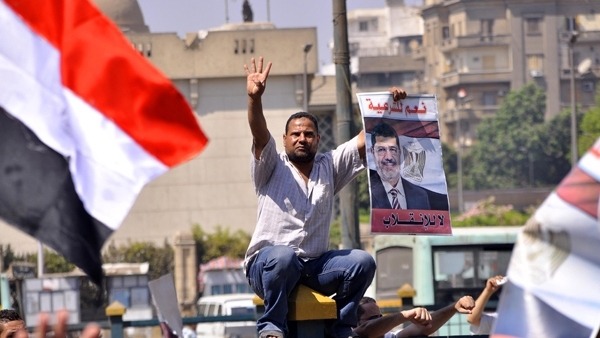
June 30th, 2013 is the day Egyptians decided to act on their Rebel campaign threats. Millions of Egyptians took to the streets of Cairo and many other cities in Egypt to protest against the Muslim Brotherhood ruling and against president Mohamed Morsi.


Walking among the protesters on that day, and overhearing their concerns and disapproval of how Morsi was running the country, gave me hope that change was about to happen. A year later, Morsi's regime has ended, but Egyptians' problems and concerns have not been solved. They are still having gas and electric shortages, a bad economy, inflation, a corrupt government and the garbage issue that is always staring them in the face.


The only difference now is that Egyptians have another president with a regime that won’t allow their citizens freedom of speech, or freedom to protest or complain. So far the Sisi regime is doing a great job of handing out mass sentences to activists and journalists, and of course death sentences to all Muslim Brotherhood supporters and leaders, regardless to their age or affiliations.


The same problems in Egypt that were the main reasons behind the ousting of Mubarak and Morsi still exist for Sisi to deal with. These issues won’t just go away simply because a new president was elected, no matter how you feel about his election.


Egypt's problems won’t go away just because of who is in charge. They are big issues and they need the whole country to come together to face these issues, with a very smart leader to lead. People in Egypt, like people in other countries, want to think that an election is the solution. But although an election is a good way to elect smart leaders who could find ways to solve social and economic issues, no issues will just disappear upon electing one person.


The revolution that started in January of 2011, and the second one in June of 2013, only helped us to remove leaders, not the underlying military regime that has been in power all along. The corrupt regime that Nasser, Sadat and Mubarak helped to build and nourish is what we need to change, and what we need to overcome.


We won’t be able to get rid of the corruption without raising awareness and giving everyone a good education, for old and new generations alike. We need a modern education to help us to listen and respect each other's views, and teach us to voice our opinions in a such a way that we all get heard and acknowledged.


We also need to create a political system that works for us; not copy other people. We need human rights laws and freedom of speech. We need to learn to be selfless and take care of each other, and above all take care of our country and love it.

The question is, when Sisi's government fails to fix Egypt's real problems, will the Egyptian people be able to take to the streets again to protest against the failure of Sisi’s regime, or will military rule prevent that from happening?

Wednesday, May 28, 2014

The Democratic Election Illusion.


You can say many things about Egyptian politics but calling it unpredictable isn’t one of them. Since the first time we had so called democratic and free elections, we always knew who would win, and the 2014 presidential election is no different.
Many Egyptians can’t help feeling like one candidate is the winner this year and that feeling is not new at all. In the Egyptian presidential election of 2012, after our amazing revolution in 2011, we were rushed into an election that forced us to vote for the Muslim Brotherhood puppet “Mohamed Morsi”.
Morsi’s campaign was like a flood that swept Egypt; banners covering buildings, posters everywhere, and he was on TV more than any of his opponents. Morsi’s image was blasted all over the place, and Egyptians were sold on the change he would bring to Egypt. Little did we know it was more of the same.
This time around we have two candidates, but you hardly can see anyone else next to the former army chief Abdel Fattah al-Sisi. Like Morsi, his images are on the buildings, his banners are in the streets, and he is all over the TV.  We’re seeing Sisi giving interviews all over, but Sisi’s rival, leftist candidate Hamdeen Sabahi, is hardly visible.
With headlines like “Sisi Set for a Landslide Win After Egypt Presidential Election Ends,“  and another headline reading, “ A Landslide Victory for Ex-Army Chief Abdel-Fattah el-Sissi is widely expected” leading into the election, it is obvious who everyone believes is going to win.
Many Egyptians are not participating in this election because they feel it is not a fair nor democratic election. But people are not allowed to voice their disagreement with the way this election has been run. Furthermore they are not allowed to protest peacefully in the street. The new anti-demonstration law that was passed this year by the acting interim president left many people in jail awaiting trials, and scared the rest of the Egyptians from protesting.
The overwhelming sentiment is: if you don’t vote for Sisi you are a traitor and you are against the army. With an atmosphere like that, people can’t help but to reman in silence. Activists are pressured to keep their opinions to themselves.
Away from all the campaign and election fuss, many poor people in Egypt don’t care one way or another. After a few years of chaos and clashes, the poor people are still suffering and their situation hasn’t improved, but rather declined. Over a quarter of Egyptians live under the poverty line.
Whoever wins the election, to many people it won’t change much. Knowing who will win an election before it happens takes all its legitimacy away, and makes it far from a democratic process. For now we are jus worried that Sisi will set Egypt back to an old repressive regime that Egyptians are very familiar with when he wins, which, of course, he will.


Saturday, May 10, 2014

Abdel Fattah El-Sisi for President?


With a high approval rating, many Egyptians think that Abdel Fattah El-Sisi is the answer to all the country’s problems. and they saying that  he is the hero God sent to make everything right again -- until he opened his mouth during an interview, which was aired in two parts, on a private Egyptian channel.

The TV interview with sisi last week revealed an out of touch military man with has no answers or understanding of how bad things are in Egypt. It also showed that he is not prepared to be the leader everyone desperately wants him to be.

His answer to a debilitating economy and high unemployment is to create trucks out of thin air and hand them over to young men to use as mobile vegetable shops. When he was asked where the trucks are coming from, Sisi said "don't worry they will be here if I say so" with the attitude of a high school bully.

When Siai was pressed to further explain his solution to the unemployment issue, he mention something about telling the banks to buy the trucks and then the drivers would be responsible for repaying the loans when they started making money.

It was clear that he had been put on the spot, He didn’t have prepared answers. However these questions should have been thought of before he ever agreed to be on the interview. Mind you that these questions are on mind of everyone in Egypt: What are you going to do about the economy? How can you solve the unemployment problems? education? corruptions? all of this are questions that need to be answered by someone who is running for president.

Sisi also promised that he will eliminate the Muslim Brotherhood from the political stage in Egypt. His language insinuated that he is going to remove them by any means necessary.

Now Egypt is faced with an unqualified front runner for president. He is a military man who thinks that he can create things out of thin air, and eliminate his opponents by any means necessary.

Unfortunately Sisi will win and the struggle will continue to find someone better to lead Egypt out of the dark ages.

Wednesday, December 25, 2013

Former PM Hisham Kandil Latest Muslim Brotherhood Member Captured


Authorities in Egypt have arrested the ousted President Morsi’s Prime Minister, Hisham Kandil. Kandil was caught in the southeast mountain area with smugglers while he  was trying to cross the border to Sudan. His arrest came as no surprise since the Egyptian authorities have been hunting down all prominent members of the Muslim Brotherhood and Morsi’s cabinet.


I have been asked time and time again about what is going on in Egypt since I spent six month there this year. Unfortunately my explanation sounds more like fiction, but it seems very obvious to me.


The Muslim brotherhood, who lived in the shadows for years, came out of hiding after the initial revolution that removed Mubarak in 2011. It was a great opportunity for them to replace  Mubarak and capitalize on the revolution. The reason why the Egyptian Military and secret services have been very successful in capturing Brotherhood members is because the Brotherhood felt very comfortable after Mubarak’s fall.


After all, the Brotherhood went through a parliamentary election and won 60% of the seats in 2011, and followed that by nominating an unknown person, Morsi, for the presidency. Getting Morsi a majority of the popular vote must have been a very comforting ego boost to the Brotherhood.


With all the winning in 2011 and 2012, the Brotherhood must have felt as if they were free at last, after 60 years of hiding. The Muslim Brotherhood had attracted more people by proving themselves legitimate after winning a majority and installing Morsi as the president.


In 2013 the Muslim Brotherhood were unstoppable. They became the mainstream, and gained street credibility. However they underestimated the Military, who were watching and quietly doing what they do best; creating a list of all the Muslim Brotherhood members. So when the military answered the people’s call for removing Morsi on July third, they were also ready to dismantle the Brotherhood soon after.


So If you want to know what is going on in Egypt, keep an eye on the military, because they are the ones with the guns, and they have the most to gain or lose if the economy goes bust.


When you hear that the authorities arrested another Brotherhood member, it shouldn’t be a surprise. It is a round-up that the military is doing to secure the country, but mostly to secure their interests and stay relevant.

Sunday, November 17, 2013

Calls to Commemorate Mohamed Mahmoud


Two years ago in Cairo, in November of 2011, I participated in a huge march from the Haram, in the Giza area, which is a suburb of Cairo, all the way to Tahrir Square: probably about nine miles. Here, ten months earlier, the revolution had emerged to remove Hosni Mubarak from power.


I was filming and photographing the crowd as it grew larger and larger, every block we walked, every neighbourhood we crossed. There are no words that could express my feelings on that day. Egyptians mobilizing and organizing to call on the Supreme Council of the Armed Forces (SCAF) to stop the violence, and  make the demands of the revolution come to life.


Many of the protesters knew that the SCAF could attack them. The previous month the SCAF had carried out an attack on peaceful protesters in front of the Egyptian State TV building. The attack resulted in the deaths of several protesters and wounding of many others. But that didn’t stop the protesters from participating this day.


Happily no violence took place.  However the following day in the late afternoon the state police attacked a group of Occupy Tahrir protesters, who were determined to stay till their demands were met. Most of those were wounded people from the revolution, and families of people who lost their loved ones during the revolution and other clashes that followed.

The state police attacked the peaceful protesters who were camping in Tahrir, and killed five people within half an hour. The attack was not anticipated by the protesters. In no time, the word got out through social media and cell phones about what was happening in Tahrir. The activists responded right away to defend the Occupy Tahrir people. After a few hours they managed to force the state police to retreat to their headquarters a few blocks away.

What stood out in my memory is that the protesters asked for help from the Muslim Brotherhood and the Salafis, and both groups declined to lend a hand, probably out of fear of losing in the upcoming parliamentary election.

These attacks sparked the week-long Mohamed Mahmoud clashes. I’m proud that i was there to document what happened. Here is some of the video that I shot during the clashes.


Mohamed Mahmoud clashes in NOV 2011 from Khaled Sayed on Vimeo.

Thursday, September 5, 2013

Egypt's Curfew is Coming to an End...or is it?


Living abroad, outside of Egypt, sometimes can be great, and sometimes frustrating as hell, because you have no choice but to look at the whole picture from the outside. But living in the USA is different because the mainstream media here don't cover Egypt unless there are clashes with casualties.


I left Egypt in early July to return to the U.S. right after the ousting of Morsi. The Egyptian people weren't sure what would come next, and they are still not sure now.


Retaliation from the Morsi supporters has been dragging on for almost two months, although they seem to protest every Friday with shrinking numbers every time.

I have been getting my information about how things are in Cairo, and Egypt overall, from friends, family, and many activists I made contact with while I was there. They inform me that life in Cairo isn't as fun anymore. Everyone is living on edge. Factories instead are doing two or one shift only instead of three, and most of the time they are closing early. People are going home before the afternoon due to the curfew, which is being enforced by the military in response to violent protests by Morsi's remaining supporters.


Fights erupt  between supporters and opponents of Morsi daily, and the Army and police have to come and stop clashes before they go too far. Assassination attempts are happening as well. The latest one was a failed attempt to kill the Minister of the Interior. A car bomb went off in Cairo's eastern district, near Interior Minister Mohammed Ibrahim's convoy.

My friend Mo'nes, who lives in Cairo, told me that Egyptians are overwhelmingly respecting the military curfew. For their own safety they are following the military guidelines, such as a recent recommendation for people to stay home for Friday prayers.  However the media is not getting much attention from the people anymore, after they started attacking the way the military is handling the situation.

I'm not surprised that the Egyptian people are showing support, and listening to the Egyptian military. Egyptians think of their military as heros for winning the 1973 war against Israel, and they trust them more than they really should. I always say never trust someone with a gun.

I believe that the military's popularity never faded, even when the military took actions that opposed the will of the general public, such as attacking and killing peaceful protesters in Maspero in October 2011, during the Mohamed Mahmoud street clashes November, and at the Council of Ministers street December 2011. The military trials are back on; something which many human rights NGOs are against. However an Egyptian military court handed down heavy prison sentences to supporters of ousted president Morsi. The court sentenced eleven men to twenty five years in prison. Forty five Muslim Brotherhood defendants were given five-year sentences. Despite all this the military’s popularity in Egypt never faded.

So consider what is happening in Egypt, from attempted assassinations, weekly Muslim Brotherhood protests, clashes between anti and pro Morsi demonstrators, and active terrorist group working hard to destroy the current interim government.

Given all that, I believe that the military will have many reasons to extend the curfew and emergency law that becomes active again last month. And the Military is in a good position right now since they are getting the Egyptian supports behind them.


Sunday, August 25, 2013

Are we seeing the last of the Muslim Brotherhood?


Another Friday protest from the Muslim Brotherhood supporters against the Egyptian military. However their call to protest attracted a low turnout. The protest was another attempt from the Muslim Brotherhood to rally in Cairo and other cities in Egypt to show their discontent with what they call the illegal removal of an elected democratic president, Morsi. The low turnout in Cairo, and the non-existent rallies around Egypt, show the unpopularity of the Muslim Brotherhood at the moment.


The military has had the upper hand so far. They have put Cairo under curfe,w and barbed wire is surrounding several squares in Cairo after the bloody clashes that left over 1,000 people dead.

The Muslim Brotherhood are losing ground in all over Egypt, and after the military detained many of their leaders over the past week, they appear scattered and less organized.

The issue I have now is that we are going backward. Many Egyptians were killed, and many people were arrested arbitrarily. It is not the right way to seek justice, or to move forward toward democracy. The Egyptian revolutionaries in Egypt fought for freedom and the end of emergency law in 2011. However, after the Muslm Brotherhood protests turned violent, the military chose to restore emergency law for the protection of the people. I have a feeling they could have done it without bringing back emergency law, but this is the way they decided to handle it.

The former President Hosni Mubarak, meanwhile, was let go from prison on Thursday and taken to a military hospital in Cairo. Mubarak was ousted during Egypt's 2011 revolution, and his release has angered Egyptians from all walks of life, and has sparked concern that the Egyptian military authorities are reinstating the old regime, which is highly unlikely. Mubarak will still appear before court to face trial for different charges related to the January 25, 2011 revolution.

However I think that if Morsi were still in power today Mubarak would have gotten out of prison anyway. Mubarak wasn’t released because of the failure of Morsi. It is a failure of the judguary system we have in Egypt. The whole Mubarak trial was filled with mistakes, in addition to a corrupt judiciary system that was installed long before Mubarak or Morsi took office.

After the arrest of many of the Muslim Brotherhood leaders over this past few weeks, is the Muslim Brotherhood weakened, or is the worst yet to come?


Saturday, August 17, 2013

The Muslim Brotherhood Shows Their True Colors


As we are watching the news and the images coming out of Egypt, and the death toll, you can see the contrast between the protests that ended Morsi’s regime and what has been going on since then.

The Muslim Brotherhood are adamant about fighting the will of the people. If they actually cared about legitimacy, they would have accepted the people’s decision to remove Morsi from office. On June 30th over 33 million of people walked out to participate peacefully in a rally asking Morsi to resign. That is more than the total number of people who voted for Morsi, and far more than have participated in protests calling for his return to office.

I understand that the Muslim Brotherhood won all elections that followed the toppling of Mubarak, and Morsi governed the country for a year. But we cannot ignore the fact that Morsi’s regime ended because of mammoth rallies and overwhelming popular opinion denouncing his rule as incompetent and partisan.

Now we are seeing Morsi supporters being used as pawns in a pointless fight. I do respect their right to protest, but you have to pick your battles. It is obvious that the Muslim Brotherhood has lost the people’s trust and sympathy.

We are left now with a group who prey on the Egyptian people’s love of their religion, and their lack of awareness about the political issues. They carelessly put these faithful followers in harm’s way, and encourage them to engage in illegal acts, such as burning churches, attacking the armed forces, and defying the military. The direct result of this behavior is that Egypt is now under emergency law again, despite the all the hard work Egyptian activists did to get it overturned in 2012.

I don’t endorse violence against civilians who are protesting for a cause they believe in. But when the Muslim Brotherhood members protest with guns and torches, I need my local authorities to take action to protect the rest of the people. Because now we are not talking about a peaceful protest or sit-in, we are talking about a terrorist organization taking to the street with assault weapons to harm civilians and challenge the authorities.

The violence we are witnessing these days from the Muslim Brotherhood isn’t even unusual for them. They seem to welcome the bloodshed to prove their legitimacy and their appeal. The Muslim Brotherhood lost a great deal of public support after their recent sit-in, and they are now facing police and military on the streets of Cairo. Their supporters are shrinking to a few thousand, and many of the people fighting in the streets on behalf of the Muslim Brotherhood aren’t even Egyptians, but have come from other countries to fight for their faith.

The Muslim Brotherhood chants about peace during their protests, however their protests have been anything but peaceful. Protesters used women and children as shields, and some had machine guns. Snipers maimed security forces from the tops of buildings. More than a dozen churches were attacked and burned on a single day by Morsi supporters.

It seems like the Muslim Brotherhood has declared war against Egypt, and is using terrorist tactics to foil the country’s aim of forming a secular democratic civil state. They have been seen burning churches, schools, and museums, randomly firing on and killing civilians sitting in their homes, burning public and private property, and targeting government buildings and police stations. These are all are clear forms of  terrorism.

What we have in Egypt right now isn’t a civil war; it is is civil unrest. In a civil war you generally see a divided military, but that hasn’t happened here. On the contrary, the unified military is very popular in Egypt right now, and the police as well. We have even seen regular civilians forming vigilante groups to defend their neighborhoods against attacks from the Muslim Brotherhood rallies.

The Muslim Brotherhood failed to impose a Taliban-like state in Egypt. The vast majority of Egyptians are more moderate muslims, and are opposed to such an idea. The misconception here that all Egyptians are in the streets protesting. The truth is the people protesting on the streets of Egypt are only the Muslim Brotherhood followers and supporters, and their popularity is getting weaker by the day.


Friday, August 16, 2013

Civil War Propaganda in the Making


I woke up today to terrible news. Forty people were killed by the military in front of the Republican Guard headquarters. 

However other news by the BBC included different details. They say the military attacked the unarmed protesters in the mosque at 4 AM today while they were praying. That seems odd to me, because by 3 AM the prayer is over and people are no longer in the mosque.

On the other hand, Al Jazeera had footage of people showing the camera empty bullet shells. Others showed unfired unused bullets. This is supposed to be evidence that unarmed people at prayer were attacked. But the bullets are easy to debunk; the empty shells fall off next to the shooter. If you are  in a protest where the police or the army is shooting at you, any empty bullet shells were probably fired by people standing next to you, not people firing at you. And they don’t fire unused bullets either; those have to come from somewhere else.

Another eyewitness who was awakened by the gunfire said that the whole thing took place in front of the Republican Guard headquarters on the street. the Muslim Brotherhood were trying to infiltrate the Republican Guard headquarters, and the military had to use force to get them out of there. So reports that it happened inside a mosque are very unlikely.

One of the famous people in the Muslim Brotherhood, a middle-aged woman named Oun Lymen, showed up on BBC Arabic to tell her side of the story. According to her she was raped for three hours by the military.

The news was bad to begin with. And it is being badly reported.


Friday of Rage Muslim Brotherhood Style.


Violence broke out as thousands of Islamists marched in several cities across Egypt in what they Called the "Friday of Rage" to protest Wednesday's crackdown on pro-Morsi protest at Al-Rabawiya and Nahda square sit-ins, which left more than 600 people dead and thousands wounded.
Health ministry sources said four were killed in clashes in the Suez Canal city of Ismailia and eight in Damietta.
A makeshift hospital in Cairo's Ramses Square, where Morsi supporters are converging, has put the death toll at 42.
Earlier, Egyptian state television reported that at least 7 were killed so far in Cairo. At least one person has been reported killed in Giza, according to the health ministry.
Al-Ahram Arabic news website reported clashes between security forces and pro-Morsi protesters at Giza Square in the Giza district, saying security forces fired teargas in an attempt to disperse the crowds.

Wednesday, July 31, 2013

The Egyptian Military's Agenda


June 30 showed the amazing unity among the Egyptian people, who took to the streets all over Egypt to hold the Morsi administration accountable for its failure to meet their demands. The largest single organized protest in human history was a direct result of a year of Muslim Brotherhood rule, with Morsi as a president.


Walking in a rally, hearing people chanting “the people want to topple the regime,” reminded me of what happened on Jan 25 2011; the initial revolution days, when people were chanting the same slogan to end the Mubarak regime.  We still trying to answer the question of whether what happened on June 30 is a second wind for the revolution, or a military coup.


Let’s examine the situation. After winning the presidential election, Morsi tried to control the country and gather all kinds of power for himself and his Muslim Brotherhood party. The Muslim Brotherhood tried to become the sole political player in Egypt, ignoring and suppressing any opposition. But in the one year of their regime, Egypt suffered electric, gas, and water shortages, along with rapidly increasing inflation. In the end, the people were feeling worse than they felt under Mubarak's regime. And Morsi ended up losing everything in only one year.


On the other hand, the military has been in power no matter who was in the presidential chair. And their power was not always beneficial to the will of the people. Even in the recent past, over 1200 civilians have been tried before military courts, and repressive tactics were used by the military in 2012 against protesters, including killing protesters.
But when Morsi came to power, the military worked with the Muslim Brotherhood, and put them in the forefront, so it would appear as if the military were not responsible for anything that might happen. They also made sure that no one would be allowed to review the military's financial affairs, their factories, and their assets. The constitution that Morsi rushed into place in just 48 hours late last year, with the support of the military, included terms that secured that deal.

Morsi did shuffle some military heads in 2012, but the military has been and will remain the strongest player in the Egyptian political scene. The military succeeded in controlling what happened on June 30, just as they did on Feb 11, 2011. For the military, it was not about the freedom and democracy the people were demanding, or supporting the activists who are working hard to bring that to Egypt. It was about protecting their interests in the huge economy they created in Egypt.

As with the start of the revolution in 2011, it was important on June 30, 2013 for the military to convince the people that the military's heroic intervention was crucial to removing Morsi, perhaps even more so than the millions of people who showed up on the streets all over Egypt. Many people discouraged any chanting against the military during the June 30 rallies on the basis that "the enemy of my enemy is my friend." This was helped by another slogan that was popular in the 2011 revolution: “The people and the army, one hand."

At the same time, the popular opposition to Morsi grew stronger every time he failed to listen to people's demands. So the people were encouraged to rally around the military, and forget the military's past mistakes. The military was smart to focus on gaining the people's love and support during the June 30 protests. They used a variety of clever tactics such as securing the safety of the protesters, overseeing and even orchestrating the rallies and celebrations, and throwing flags to the crowd from military helicopters overhead to show that they were backing the people's cause.

I've started to notice that the state police are also using a similar strategy, and are gaining some popularity on the streets from the people who have already forgotten what the police used to be like. The police force in Egypt is best known for detaining innocent people, torturing them, and then killing them. The classic example is Khaled Said, whose death at the hands of the police was one of the key issues in the initial 2011 revolution. Like the military, the police are being praised as heroes, without any accountability for what the did to thousands of protesters before. Sadly, people forget too easily that the state police force is still the same one that left Egypt lawless and without security for two years. That state police is being transformed in the minds of the people from a tool that regimes used to terrorise protesters, to a bunch of heroes and revolution protectors.

The awful truth is that both the Military and the Police served Morsi when it was beneficial for them, and they will serve the future regime, without regard to the will of the people.

The important question is whether there was animosity between the the military and the Muslim Brotherhood. The reality is that the military worked directly with the Muslim Brotherhood when it suited their needs, but ultimately sacrificed the Muslim Brotherhood because they did fail, on many levels, to manage the country.

We do have to remember that the Egyptian military helped us to get rid of Morsi. However we are facing new challenges. With the popular support of the people, the military could quickly return to repressing popular opinion and getting rid of anyone in the future who might challenge or disagree with them.

Egyptians are starting to realize that, without a true democratic process, the ballot box is just a different way for the few elites to control the masses. Our responsibility is to keep watching, and to use the power of organized peaceful protest to remove anyone who doesn’t serve the interests of the people.


Saturday, July 27, 2013

No Apologies


For the people who are talking about reconciliation with Muslim Brotherhood, I have to say no.


If you want to reconcile with the Muslim Brotherhood, that means you've forgotten what they have done: inciting violence, persecuting non-muslims, and driving a wedge between themselves and other Egyptians.


You should just let them be. Go back to your corner wait for them to make the first move toward real reconciliation. The Muslim Brotherhood's history is filled with aggression, partisanship, and lies. The Muslim Brotherhood chose to alienate the rest of the Egyptian people who disagreed with them, and to make enemies out of them.

Getting together with the Muslim Brotherhood now means that you can live with their way of doing business, and agree with their ideology. That's how they see it. Up to now none of the Muslim Brotherhood members has offered any apologies for the way they have been leading the country, brainwashing their supporters to go on rampages, and attacking protesters, the military, or the police.

What we need to do is to hold the Muslim Brotherhood leaders accountable for all the violent protests that broke out after June 30.

So stop talking about making good with Muslim Brotherhood. Just get them out of politics altogether, and make sure that nobody else will use religion in politics the same way Muslim Brotherhood did.