About Khaled Sayed

Showing posts with label Tahrir square. Show all posts

Tuesday, January 14, 2014

Egypt Holds Yet Another Referendum on a New Constitution


The 2012 constitution, that was passed during Morsi's presidency, was suspended after Morsi's removal on July third. It was widely criticized by secular political figures and activists alike for being shaped to the islamist view, and rushed. Despite its unpopularity the final text passed a referendum in December 2012.

Egypt is yet again facing another referendum on a new constitution; the second since the removal of Mubarak. A year ago Morsi pushed forward a vote on his Muslim Brotherhood version of the constitution, and now there's an attempt to push forward the military version. Not only are the interim president and many of Mubarak's friends behind this constitution, but also the military is backing this constitution, and working hard to crack down on any protest against it.

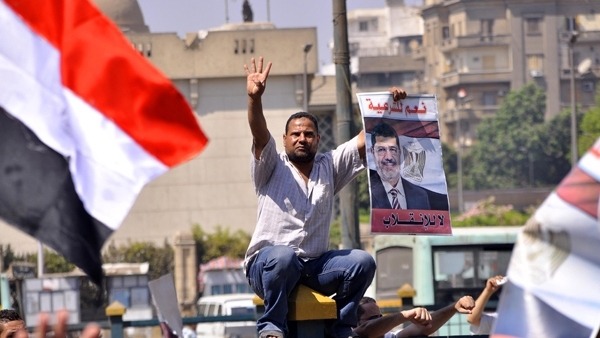
Although Morsi's supporters are not the only ones unhappy with this constitution, they are the only people who are boycotting it and protesting against it on the street, creating scenes of instability and chaos.

Egyptian activists believe that the new constitution has many improvements when it come to freedom, but still it is far from perfect. Where Morsi’s constitution fell short on basic freedom, the 2013 version seems to push for freedoms and holding Egypt to its obligations under international human rights treaties, but may apply more restriction on labor rights.

According to human rights activists, freedom of expression seems well-addressed in the amended document, however many fear that the loose definition could lead to possible limitation in future laws.

"The provision is okay, but it is weakened by the fact that it fails to define limitations or how to balance potential conflicts with other articles," Heba Morayef, Egypt director for Human Rights Watch (HRW), told Ahram Online.

Many political and economic experts argue about whether the draft constitution will help meet revolutionaries' demands for greater social justice. On the positive side, the new constitution may offer a true chance at social justice for Egyptians, especially farmers and workers.

There is also good news for Education and Health Care research. For example the 18, 19, 21 and 23 articles require that the state give a specific percentage to Education and Health from the Gross National Product (GNP).  The 2012 constitution, which was drafted under the presidency of Morsi, required the state only to allocate “an adequate amount" for these items from the state budget.

Despite the pros and cons for the new constitution, there is huge media coverage and a push for getting people to vote yes. A friend of mine counted over 60 billboards and posters in neighborhoods in Cairo alone encouraging people to vote yes. On the other hand, the Muslim Brotherhood has been instigating violence all over Egypt, and many people were killed or arrested as a result of clashes with the security forces on the first day of voting.


Wednesday, November 27, 2013

Prosecutors Order the Arrest of Egyptian Activists


If you thought the Egyptian revolution has changed anything about Egyptian politics, you are sorely mistaken. Prosecutors have been ordering arrests of prominent Egyptian activists who were protesting outside of the high court in response to the new demonstration law. The new law, which was signed by the interim president Adly Mansour, bans street protests.

Under the new law, Egyptian police are allowed to use force to disperse demonstrators. In addition captured demonstrators could be sentenced to prison for as long as seven years for the use of violence at a protest, one year for covering their faces during a protest, or one year for protesting outside a place of worship. Furthermore, anyone attending an unauthorised protest can be fined up to $1,500. The new law targets public gatherings of ten people or more without government approval.
In order to avoid imprisonment or a fine, you should notify the authorities that you will be protesting three days before the protest takes place.

After arresting 15 women and 12 men who took part in the demonstration outside the upper house of parliament, they were released in the middle of the night on a desert road about 6 miles south of Cairo.

Whoever crafted that law obviously knows very little about Egyptians. I have attended many protests in Egypt, and one thing I have noticed about the crowd is that it is a fierce crowd. They do not fear water cannons, tear gas, or even bullets. A law like this will not stop the people from taking to the street to protest.

I believe that what the interim government is doing is paying much more attention to activists than the bad economy, the poor people, and the failing education system.

The government is ignoring the main reasons why activists call for protests. These reasons have not changed since before the removal of Mubarak in 2011. The terrible living situation is due to the lack of security, the lack of employment for young people, and the inflation that is a burden on all Egyptians. These issues won’t go away without the Egyptian government actively fixing them, and listening to their people’s demands. There will be no need to demonstrate, or for a law against demonstrations, if the government does its job.


The recent arrest and the new anti-demonstration law are tools to repress the Egyptian people, but that tactic didn’t work for either Hosni Mubarak who was removed in January, 2011, nor Mohamed Morsi who was removed in July, 2013, both by the will of the people.


Article 73: Citizens have the right to hold general meetings, marches or protests, or any form of peaceful protest, without carrying any weapon and upon notifying the authorities of planned demonstrations in accordance with the law.

Sunday, November 17, 2013

Calls to Commemorate Mohamed Mahmoud


Two years ago in Cairo, in November of 2011, I participated in a huge march from the Haram, in the Giza area, which is a suburb of Cairo, all the way to Tahrir Square: probably about nine miles. Here, ten months earlier, the revolution had emerged to remove Hosni Mubarak from power.


I was filming and photographing the crowd as it grew larger and larger, every block we walked, every neighbourhood we crossed. There are no words that could express my feelings on that day. Egyptians mobilizing and organizing to call on the Supreme Council of the Armed Forces (SCAF) to stop the violence, and  make the demands of the revolution come to life.


Many of the protesters knew that the SCAF could attack them. The previous month the SCAF had carried out an attack on peaceful protesters in front of the Egyptian State TV building. The attack resulted in the deaths of several protesters and wounding of many others. But that didn’t stop the protesters from participating this day.


Happily no violence took place.  However the following day in the late afternoon the state police attacked a group of Occupy Tahrir protesters, who were determined to stay till their demands were met. Most of those were wounded people from the revolution, and families of people who lost their loved ones during the revolution and other clashes that followed.

The state police attacked the peaceful protesters who were camping in Tahrir, and killed five people within half an hour. The attack was not anticipated by the protesters. In no time, the word got out through social media and cell phones about what was happening in Tahrir. The activists responded right away to defend the Occupy Tahrir people. After a few hours they managed to force the state police to retreat to their headquarters a few blocks away.

What stood out in my memory is that the protesters asked for help from the Muslim Brotherhood and the Salafis, and both groups declined to lend a hand, probably out of fear of losing in the upcoming parliamentary election.

These attacks sparked the week-long Mohamed Mahmoud clashes. I’m proud that i was there to document what happened. Here is some of the video that I shot during the clashes.


Mohamed Mahmoud clashes in NOV 2011 from Khaled Sayed on Vimeo.

Saturday, November 2, 2013

No End to Islamist Violence in Sight


Even though the Muslim Brotherhood leaders are losing ground and Egyptian public support, they are still insisting on unrealistic demands. While they have no upper hands, the Muslim Brotherhood are demanding to sack military leaders, reinstate the deposed president Morsi, and restore the constitution Morsi pushed through.

While the Muslim Brotherhood trying to send a message to the world that they won’t accept what they call a military coup that ousted Morsi, they are paying a high price in human lives that they lose every time they take their show of support for Morsi to the street.

Eager to take over Egypt's political scene after the toppling of Mubarak in the January 25 popular uprising, the Muslim Brotherhood did everything they could to lead the country. Their political party, Freedom and Justice, was a brand new front for the Muslim Brotherhood that won the majority in the parliament in 2012, followed by electing a Muslim Brotherhood president who has been unknown to most Egyptians until right before the election.

With all these successes under their belt, the Muslim brotherhood didn’t care about the Egyptian people's security, economy, or the demands they made during the 2011 revolution. Morsi was only interested in what the Muslim Brotherhood's supreme guide, Mohamed Badie, advised him to do every step of the way during his short-lived one year presidency.

Although Morsi was very popular among his party and group members, he wasn’t very popular on the street. People mocked Morsi and made fun of his many gaffes on Egyptian TV and during his trips to other country.

The Muslim Brotherhood is continuing to defy the military. However the crackdown is targeting the top heads of the Muslim Brotherhood organisation and prominent members. One of the latest arrests was the Senior Muslim Brotherhood deputy leader Essam el-Erian. He was arrested in a Cairo suburb in late October. Today thousands of Morsi supporters demonstrated nationwide on Friday against the military-backed government ahead of his planned trial on Nov. 4.

Mohamed Morsi, who was removed from the presidency by the military amid nationwide protests against him is still in custody and accused of many crimes, such as inciting violence and of failing to protect protesters who were killed outside the presidential palace in El-Etahadya.

The Muslim Brotherhood rallies people to go out and protest and sacrifice themselves for the selfish goals of increasing the group's own political power, and restoring their control over Egypt again. However I think Egyptian people are becoming smarter every day, and with no end to Islamist violence in sight, Egyptians are getting more familiar with Muslim brotherhood rhetoric, and their truly violent nature.

Thursday, September 5, 2013

Egypt's Curfew is Coming to an End...or is it?


Living abroad, outside of Egypt, sometimes can be great, and sometimes frustrating as hell, because you have no choice but to look at the whole picture from the outside. But living in the USA is different because the mainstream media here don't cover Egypt unless there are clashes with casualties.


I left Egypt in early July to return to the U.S. right after the ousting of Morsi. The Egyptian people weren't sure what would come next, and they are still not sure now.


Retaliation from the Morsi supporters has been dragging on for almost two months, although they seem to protest every Friday with shrinking numbers every time.

I have been getting my information about how things are in Cairo, and Egypt overall, from friends, family, and many activists I made contact with while I was there. They inform me that life in Cairo isn't as fun anymore. Everyone is living on edge. Factories instead are doing two or one shift only instead of three, and most of the time they are closing early. People are going home before the afternoon due to the curfew, which is being enforced by the military in response to violent protests by Morsi's remaining supporters.


Fights erupt  between supporters and opponents of Morsi daily, and the Army and police have to come and stop clashes before they go too far. Assassination attempts are happening as well. The latest one was a failed attempt to kill the Minister of the Interior. A car bomb went off in Cairo's eastern district, near Interior Minister Mohammed Ibrahim's convoy.

My friend Mo'nes, who lives in Cairo, told me that Egyptians are overwhelmingly respecting the military curfew. For their own safety they are following the military guidelines, such as a recent recommendation for people to stay home for Friday prayers.  However the media is not getting much attention from the people anymore, after they started attacking the way the military is handling the situation.

I'm not surprised that the Egyptian people are showing support, and listening to the Egyptian military. Egyptians think of their military as heros for winning the 1973 war against Israel, and they trust them more than they really should. I always say never trust someone with a gun.

I believe that the military's popularity never faded, even when the military took actions that opposed the will of the general public, such as attacking and killing peaceful protesters in Maspero in October 2011, during the Mohamed Mahmoud street clashes November, and at the Council of Ministers street December 2011. The military trials are back on; something which many human rights NGOs are against. However an Egyptian military court handed down heavy prison sentences to supporters of ousted president Morsi. The court sentenced eleven men to twenty five years in prison. Forty five Muslim Brotherhood defendants were given five-year sentences. Despite all this the military’s popularity in Egypt never faded.

So consider what is happening in Egypt, from attempted assassinations, weekly Muslim Brotherhood protests, clashes between anti and pro Morsi demonstrators, and active terrorist group working hard to destroy the current interim government.

Given all that, I believe that the military will have many reasons to extend the curfew and emergency law that becomes active again last month. And the Military is in a good position right now since they are getting the Egyptian supports behind them.


Sunday, August 25, 2013

Are we seeing the last of the Muslim Brotherhood?


Another Friday protest from the Muslim Brotherhood supporters against the Egyptian military. However their call to protest attracted a low turnout. The protest was another attempt from the Muslim Brotherhood to rally in Cairo and other cities in Egypt to show their discontent with what they call the illegal removal of an elected democratic president, Morsi. The low turnout in Cairo, and the non-existent rallies around Egypt, show the unpopularity of the Muslim Brotherhood at the moment.


The military has had the upper hand so far. They have put Cairo under curfe,w and barbed wire is surrounding several squares in Cairo after the bloody clashes that left over 1,000 people dead.

The Muslim Brotherhood are losing ground in all over Egypt, and after the military detained many of their leaders over the past week, they appear scattered and less organized.

The issue I have now is that we are going backward. Many Egyptians were killed, and many people were arrested arbitrarily. It is not the right way to seek justice, or to move forward toward democracy. The Egyptian revolutionaries in Egypt fought for freedom and the end of emergency law in 2011. However, after the Muslm Brotherhood protests turned violent, the military chose to restore emergency law for the protection of the people. I have a feeling they could have done it without bringing back emergency law, but this is the way they decided to handle it.

The former President Hosni Mubarak, meanwhile, was let go from prison on Thursday and taken to a military hospital in Cairo. Mubarak was ousted during Egypt's 2011 revolution, and his release has angered Egyptians from all walks of life, and has sparked concern that the Egyptian military authorities are reinstating the old regime, which is highly unlikely. Mubarak will still appear before court to face trial for different charges related to the January 25, 2011 revolution.

However I think that if Morsi were still in power today Mubarak would have gotten out of prison anyway. Mubarak wasn’t released because of the failure of Morsi. It is a failure of the judguary system we have in Egypt. The whole Mubarak trial was filled with mistakes, in addition to a corrupt judiciary system that was installed long before Mubarak or Morsi took office.

After the arrest of many of the Muslim Brotherhood leaders over this past few weeks, is the Muslim Brotherhood weakened, or is the worst yet to come?